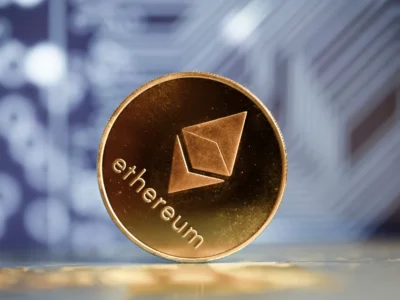
Ethereum

Ethereum Explained: The World Computer Powering a Decentralized Future

In the ever-expanding universe of digital innovation, few technologies have captured global attention quite like Ethereum. More than a cryptocurrency, Ethereum is a foundational platform—an ecosystem where decentralized applications come to life, smart contracts automate trust, and blockchain technology moves beyond simple transactions to enable a reimagining of the internet itself. Often referred to as a “world computer,” Ethereum has become synonymous with the evolution of decentralized finance, NFTs, and Web3.

But what exactly is Ethereum? Why has it become the backbone of so many blockchain projects? And how is it shaping the next chapter of digital infrastructure? This article takes a comprehensive look at Ethereum, unpacking its history, capabilities, use cases, and the implications it holds for the future of technology and finance.

What Is Ethereum?

Ethereum is an open-source, blockchain-based platform that enables developers to build and deploy decentralized applications (dApps). It was conceived in 2013 by a then-teenaged programmer, Vitalik Buterin, and officially launched in 2015. While Bitcoin was designed as a peer-to-peer digital currency, Ethereum was created to be much more versatile—a programmable blockchain that allows for complex interactions between parties without the need for intermediaries.

Its native cryptocurrency, Ether (ETH), functions both as a digital asset and as “fuel” that powers operations on the Ethereum network. Every interaction, from sending ETH to executing a smart contract, requires gas—a fee paid in Ether.

The Innovation of Smart Contracts

At the heart of Ethereum lies the concept of smart contracts—self-executing code stored on the blockchain that runs when predefined conditions are met. These contracts eliminate the need for third-party enforcement, allowing trustless transactions and agreements.

Smart contracts can be used to:

  • Transfer assets between parties without intermediaries

  • Create decentralized financial products such as loans, insurance, or exchanges

  • Manage digital identities and voting systems

  • Build games, marketplaces, and even entire decentralized autonomous organizations (DAOs)

The flexibility of these contracts has turned Ethereum into a developer’s playground, where creativity meets autonomy.

Ethereum vs. Bitcoin: Key Differences

While both Ethereum and Bitcoin operate on blockchain technology and use proof-based systems, their purposes and architectures differ significantly.

Purpose

  • Bitcoin: Primarily designed as a decentralized digital currency

  • Ethereum: A programmable blockchain for building dApps and smart contracts

Flexibility

  • Bitcoin: Limited scripting language, primarily for monetary transactions

  • Ethereum: Full-fledged Turing-complete language (Solidity) enabling complex logic

Block Time

  • Bitcoin: Approximately 10 minutes

  • Ethereum: Around 12 seconds, allowing faster transaction confirmations

Supply

  • Bitcoin: Capped at 21 million coins

  • Ethereum: No fixed supply, though recent upgrades are influencing its issuance rate

Real-World Use Cases of Ethereum

Ethereum’s adaptability has fueled an explosion of applications that extend far beyond digital currency. Some of the most impactful sectors include:

1. Decentralized Finance (DeFi)

DeFi applications on Ethereum allow users to lend, borrow, trade, and earn interest—all without a bank. Platforms like Aave, Compound, and Uniswap have created financial systems that are open, transparent, and globally accessible.

2. Non-Fungible Tokens (NFTs)

Ethereum is the birthplace of NFTs—unique digital assets that represent ownership of art, collectibles, or digital experiences. Marketplaces such as OpenSea and Foundation have turned digital creators into entrepreneurs, leveraging Ethereum’s blockchain for provenance and scarcity.

3. Gaming and Virtual Worlds

Games built on Ethereum enable players to earn, trade, and own in-game assets. Platforms like Axie Infinity and Decentraland are pioneering blockchain-based economies where digital ownership is real and tradable.

4. Identity and Governance

DAOs—decentralized autonomous organizations—operate on Ethereum to enable community-driven decision-making without centralized control. These organizations use smart contracts to execute votes and manage resources transparently.

Ethereum 2.0: A Necessary Evolution

As Ethereum’s popularity surged, so too did its challenges. Network congestion, high gas fees, and environmental concerns prompted a major evolution—Ethereum 2.0, also known as the Merge.

Key features of Ethereum 2.0 include:

  • Proof of Stake (PoS): Replacing energy-intensive Proof of Work, PoS allows users to validate transactions by staking ETH, dramatically reducing energy consumption

  • Scalability: Future upgrades will introduce shard chains, allowing Ethereum to process many transactions in parallel

  • Sustainability: The network’s energy use has dropped by over 99% since the Merge, addressing major environmental criticisms

This transformation positions Ethereum to remain competitive and viable as a global platform for decentralized innovation.

Risks and Criticisms

No technological revolution is without risk, and Ethereum is no exception. Several challenges continue to provoke debate and scrutiny:

1. Security Vulnerabilities

Smart contracts are only as reliable as the code they contain. Poorly written contracts can be exploited, resulting in millions lost through hacks and bugs.

2. Centralization Concerns

Though Ethereum champions decentralization, some critics argue that staking may favor wealthier participants, potentially consolidating power among a small group.

3. Regulatory Uncertainty

Governments worldwide are grappling with how to classify and regulate Ethereum and the applications it supports. Unclear policies could affect its adoption and growth.

Why Ethereum Matters

Ethereum is not just another cryptocurrency—it is an infrastructure layer for the decentralized web. Its significance lies not in its price alone, but in its potential to reshape digital interaction. By removing the need for trust in intermediaries, Ethereum empowers users with direct control over their data, their finances, and their digital presence.

Its influence spans from art to insurance, from governance to gaming, and from identity to global finance. In many ways, Ethereum represents the first tangible glimpse into a truly decentralized, user-centric internet.

Final Thoughts: Ethereum’s Expanding Horizon

Ethereum is still evolving. As developers continue to innovate and the network becomes more efficient, Ethereum is poised to play a foundational role in Web3—the next generation of the internet.

Its success will depend not just on technological upgrades but on thoughtful governance, inclusive development, and ethical use. For now, Ethereum remains one of the most dynamic and influential platforms in the blockchain universe—a bold experiment in decentralization that’s shaping the future of how we interact, transact, and trust in the digital age.

What is your reaction?

Excited
0
Happy
0
In Love
0
Not Sure
0
Silly
0

You may also like

More in:Ethereum