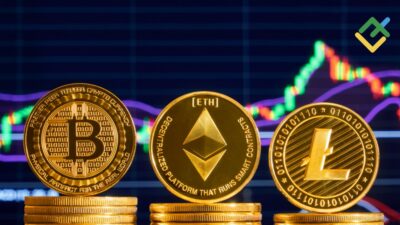
Bitcoin

Bitcoin: The Digital Gold Reshaping Modern Finance

Introduction: A Currency Born of Crisis

In the wake of the 2008 financial meltdown, trust in traditional banking institutions suffered a seismic blow. Out of this disillusionment emerged Bitcoin—a radical idea for a currency independent of governments and central banks, designed to put financial power directly into the hands of individuals. Today, Bitcoin stands not merely as a speculative asset but as a symbol of technological innovation, financial sovereignty, and the evolving nature of money itself.

What Is Bitcoin?

Bitcoin is a decentralized digital currency that allows peer-to-peer transactions to occur directly between users, without the need for an intermediary. Invented by an anonymous figure (or group) under the pseudonym Satoshi Nakamoto, Bitcoin was introduced in 2009 as open-source software. It relies on blockchain technology—a distributed ledger that records every transaction across a global network of computers, ensuring transparency and immutability.

The Technology That Powers Bitcoin

At the heart of Bitcoin lies the blockchain, a chain of blocks, each containing a batch of verified transactions. This structure is secured through cryptography and consensus algorithms that prevent double-spending and fraud.

Key technological components include:

  • Mining: The process by which new Bitcoins are created and transactions are validated. Miners use powerful computers to solve complex mathematical puzzles, securing the network in return for rewards.

  • Nodes: Computers that maintain copies of the blockchain and enforce the protocol rules.

  • Wallets: Digital tools that allow users to store, send, and receive Bitcoins securely using cryptographic keys.

Why Bitcoin Captivates Investors

Bitcoin’s allure lies in its promise of decentralization and its finite supply—only 21 million Bitcoins will ever exist. This scarcity, paired with increasing demand, fuels its reputation as “digital gold.” Many investors regard it as a hedge against inflation, akin to precious metals but more portable and divisible.

Major factors driving Bitcoin’s appeal:

  • Limited Supply: With its hard cap, Bitcoin resists the inflationary pressures that plague fiat currencies.

  • Decentralization: No government or central bank can manipulate its supply.

  • Global Accessibility: Bitcoin transcends borders, offering financial inclusion to the unbanked.

  • Transparency and Security: Every transaction is publicly recorded on the blockchain.

Bitcoin’s Journey: From Fringe to Mainstream

Initially dismissed as an experiment or even a tool for illicit transactions, Bitcoin has matured remarkably. Large institutions, from hedge funds to publicly traded companies, now allocate portions of their balance sheets to Bitcoin. Payment platforms such as PayPal and Square enable millions to buy, sell, and hold Bitcoin easily. El Salvador, in a historic move, adopted Bitcoin as legal tender in 2021, igniting debates worldwide about its future as a national currency.

Volatility: The Double-Edged Sword

Bitcoin’s volatility is legendary. Its price can swing dramatically within hours—an attribute that draws speculative traders but unnerves traditional investors. This price turbulence stems from its relatively small market capitalization compared to fiat currencies, its limited liquidity, and the emotional currents that drive market sentiment.

Yet, many argue that volatility is the growing pain of a nascent asset class. As adoption widens and liquidity deepens, proponents believe Bitcoin’s price will stabilize over time, cementing its role as a mainstream store of value.

Bitcoin vs. Traditional Finance

Bitcoin challenges conventional notions of banking and monetary policy. Unlike fiat currencies, which governments can print at will, Bitcoin’s supply schedule is coded into its protocol and enforced by its network of nodes and miners. Central banks adjust interest rates and inject liquidity to manage economies—tools unavailable in the Bitcoin ecosystem.

This has sparked a philosophical divide: proponents view Bitcoin as an antidote to the pitfalls of centralized monetary control, while critics argue it cannot function as a viable currency due to its price swings and scalability limitations.

The Regulatory Tightrope

Bitcoin’s decentralized nature has triggered regulatory scrutiny worldwide. Governments grapple with how to classify and tax it—property, commodity, or currency? Some nations embrace it, others ban or restrict its use. Balancing innovation with consumer protection remains a delicate act for regulators.

Environmental Concerns: A Challenge to Address

Bitcoin mining’s energy consumption has drawn widespread criticism. Vast mining farms, especially in regions reliant on fossil fuels, raise questions about sustainability. The industry is actively exploring solutions: migrating operations to renewable energy sources, improving mining efficiency, and considering innovations like proof-of-stake systems, though these would fundamentally change Bitcoin’s architecture.

The Future of Bitcoin: Promise and Uncertainty

No one can predict Bitcoin’s fate with certainty. Some envision it becoming a global reserve asset—an incorruptible, decentralized counterpart to gold. Others see its technological framework inspiring broader applications in decentralized finance (DeFi) and beyond, even if Bitcoin itself does not achieve universal adoption as a currency.

What is clear is that Bitcoin has sparked an irreversible conversation about what money can be in the digital age.

Key Takeaways for Potential Investors

Before venturing into Bitcoin, prospective investors should keep a few core principles in mind:

  • Educate Yourself: Understand the technology, market dynamics, and risks involved.

  • Diversify: Don’t stake your entire portfolio on a single volatile asset.

  • Secure Your Holdings: Use reputable wallets and exchanges; safeguard your private keys.

  • Stay Informed: The crypto landscape evolves rapidly. Staying updated is essential.

Conclusion: A New Chapter in Financial History

Bitcoin’s story is far from over. Whether it becomes a dominant store of value, a global medium of exchange, or simply an asset class among many, its legacy is already secure. It has challenged entrenched financial systems, sparked innovation, and empowered millions to rethink what it means to own and control money.

In a world where trust in institutions wavers, Bitcoin stands as a testament to the power of code, community, and an audacious vision for financial freedom.

What is your reaction?

Excited
0
Happy
0
In Love
0
Not Sure
0
Silly
0

You may also like

More in:Bitcoin